
One of the biggest, wildest festivals in Sardinia always proves to be the Carnival. Wherever you are on the island, expect Carnival in Sardinia to be spectacular, hectic, and delicious. That’s right, because right along with the wild parties are the never-missing seasonal pastries that add the necessary touch of sweetness to the cold winter days.
There is not a single Carnival in Sardinia, but many. Depending on the area, you will join a medieval joust of acrobatic equestrian vaulting, or ancestral masquerades rhythmically dancing around town. Different in colours, shapes, and rituals, but similar in the overall scent of deep-fried pastries and their intoxicating fragrance that pervades the streets weeks before the celebrations begin.
Like for every occurrence in Sardinia, the Carnival also comes with a long history and plenty of rituals and strings attached.
History and symbols of Carnival in Sardinia
Just like ALL the festivals we have in Sardinia, the Carnival also originates from nature-based paganism. It was obviously not known as “Carnival” and probably just a sequence of rituals to donate to Mother Nature and ask Her for a good harvest. All rituals in celebration of the end of the cold season and the arrival of the season of light, and of the moment of reaping the fruits of the hard work.
These rituals always matched the end of what we now call winter and the days towards spring that have been conventionally set between the 20th and the 22nd of March every year.
Carnival is usually around mid-February, sometimes at the beginning of March, and leads us to another important period in the Gregorian Calendar: Lent, the forty days before Easter.
When Christianity came to be, people were “allowed” to carry on with their millenarian rituals, but in the form of “parties” instead of sacred rituals devoted to and aimed at Nature’s divine energy and entities.
In Sardinia, a careful observer can still see the primordial character of such ceremonies.
Foods prepared for Carnival in Sardinia
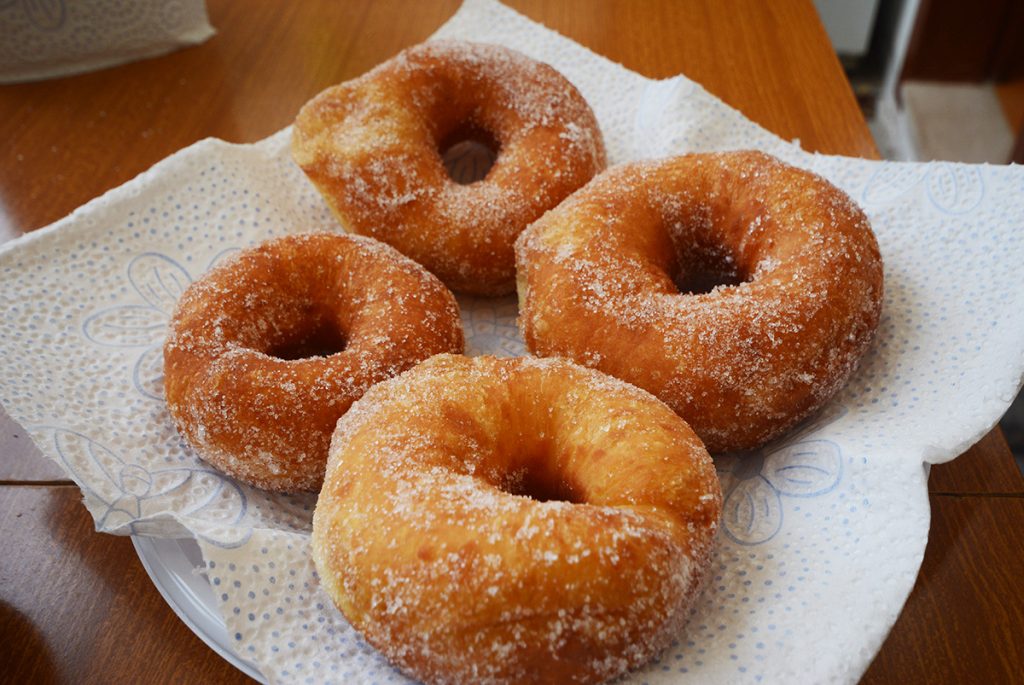
Wherever you are in Sardinia during Carnival or in the weeks before, you are likely to perceive the typical smell of deep-fried pastries that characterises these days.
Tzippulas, fatti fritti, bruniollos, and orillettas are only a few of the myriad of pastries prepared around Sardinia to make the Carnival sweeter. Some are made with fresh ricotta cheese, some infused with abb’ardente or fil’e ferru (Sardinian-style brandy), some orange-flavoured.
Where to go for great Carnival celebrations in Sardinia
Carnival in Sardinia is celebrated in many places, some with a more modern style of allegorical floats and some clearly pulling out directly from ancient rituals that have lost their original meaning.
Here, I will mention three towns in Sardinia that are famous for their Carnival, but there are many more, some less touristy and more intimate.
For each of them, it’s absolutely crucial that you know the dates of all the events; otherwise, you will risk missing them.
Different celebrations, different masquerades, different vibes, if you will. But what I like to see and sense from the Carnival in Sardinia is the commitment to get back to being closer to Nature. Just like our ancestors in the Neolithic and Paleolithic.
Oristano
A whole two weeks of rituals, sophisticated masks, horse riding and vaulting performances, and obviously food stalls selling local specialties and plenty of fun is what you can expect from the Carnival of Oristano, known as “Sa Sartiglia“.
If you have attended Carnival celebrations in other places around the island, you will immediately notice that the Sartiglia doesn’t look like any of them. While you see apotropaic masks pretty much everywhere, in Oristano, the attention will be on medieval-style horse tournaments. This is probably why, only around the 18th century, Sartiglia became Carnival!
If you wish to stay in the area, I strongly suggest planning in advance, as it will be difficult to find accommodation at the last minute.
Mamoiada
The Carnival of Mamoiada is one of the ancient masks of our pre-Christian, pagan traditions and is tightly linked to Sardinia’s agro-pastoral way of living.
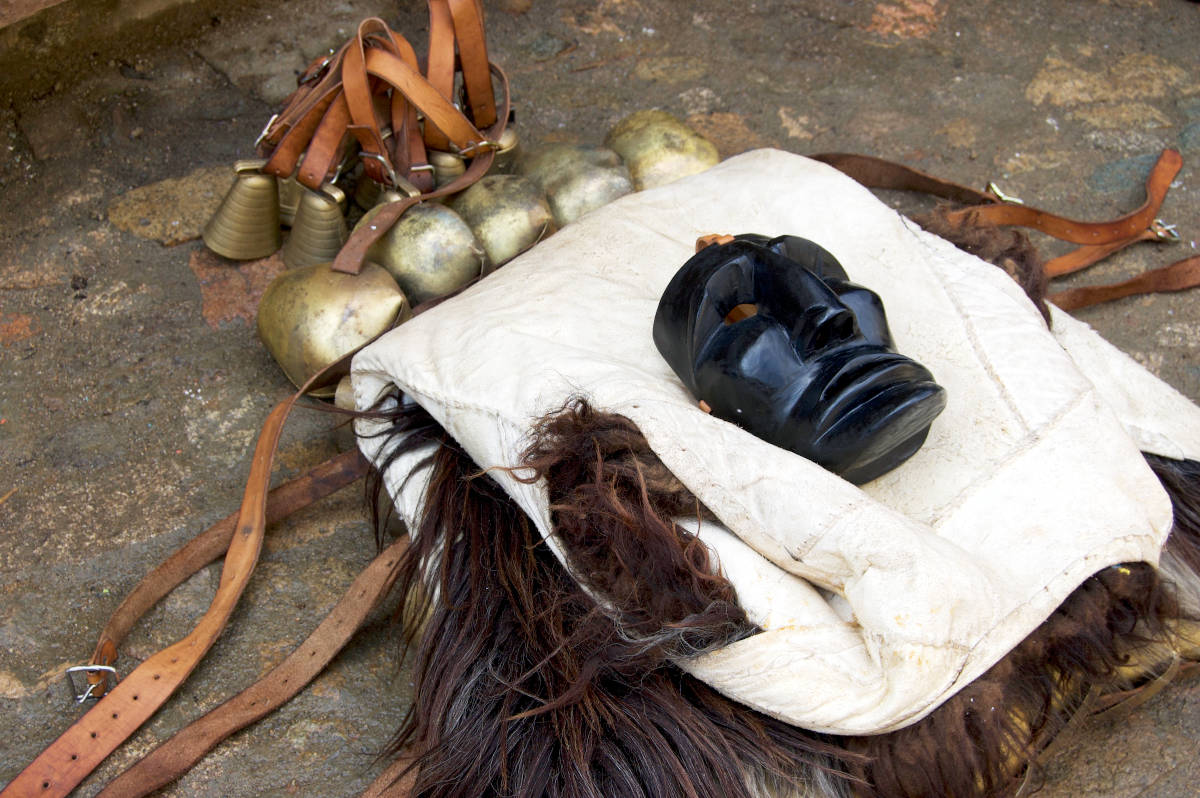
The stars of the show are the Mamuthones, local men wearing dark wooden masks and heavy sheep clothes with some 30 kg of bells on their backs. They walk rhythmically around town, preceded and somehow guided by the “Issohadores”, men dressed in red and white and using a rope to “seize” the women attending the parade.
Like the Sartiglia of Oristano, also Mamoiada’s Mamuthones are very popular and since the local B&Bs are few, booking well ahead is your best bet. Otherwise, you can also stay in the surrounding towns.
Tempio Pausania
The Carnival of Tempio Pausania in northern Sardinia is celebrated with a series of colorful parades of allegorical floats as well as historical representations and the story of the main character of Tempio’s Carnival: Re Giorgio (King George).
This figure incarnates all the evil and the broken promises of the “establishment”. So at the end of the Carnival celebrations, the puppet representing King George is burnt at the stake in the public square.
Here, the party is in big style with plenty of music, dancing, children’s parades, and a final show of fireworks.
Do you need help planning your trip? Choose between my travel services:
👉 Custom Sardinia itineraries – I craft your itinerary, you proceed with all the bookings
👉 Custom vacation packages – I take care of everything: custom itinerary tailored to your travel style and booking of all the logistics!